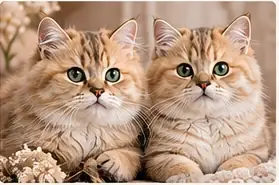
Quiet companionship, a plush coat and a rounded expression. British cats can make wonderfully steady companions, provided their independence, grooming needs and daily activity are respected.
The British Shorthair developed from Britain’s domestic cat population into the substantial, rounded breed recognised today. Longhaired ancestry in breeding history also contributed the longer-coated British type. The British Longhair is recognised by TICA.
Short and long coats should be described for the individual cat. A longhaired parent does not mean that every kitten in a particular litter is longhaired. All four kittens in our current Simba ♥ Mica litter are British Shorthair.
Affection without constant carrying
British cats are often described as steady and relatively undemanding in how they express affection. A cat may happily sit beside you or share a room without wanting to be lifted onto a lap. That quieter style can be a very rewarding relationship.
Avoid treating tolerance as permission to keep carrying a cat that wants to get down. Give them choices: a nearby bed, a stable perch and a predictable way to join you. Individual kittens still differ in boldness, playfulness and response to visitors.
The attractions — and the trade-offs
A British cat can suit someone who appreciates a companion with a little independence. Their appearance is appealing, but choosing only for golden or silver colour misses the more important question: does their interaction style suit you?
A mature cat may be less visibly athletic than an energetic youngster, yet daily movement remains important. Do not mistake a quiet temperament for a need to spend the day with no play. Nor does a short coat remove the need for grooming.
Enjoy: a companion whose affection may be expressed through proximity and routine.
Provide: daily play, appropriate scratching places, quiet rest and attention to body condition.
Reconsider expectations: constant cuddling, carrying or an entirely maintenance-free coat.
Shorthair care versus Longhair care
For a British Shorthair, work a gentle comb or suitable brush through the dense coat regularly and increase attention during shedding. Check the skin rather than only smoothing the surface. Introduce handling of paws, mouth and ears in brief, positive sessions.
For a Longhair, make combing a more frequent part of the week and check the underarms, chest, belly, trousers and behind the ears. The right routine is the one that prevents tangles for that cat. Daily checks can be useful even when a full grooming session is not needed.
Routine bathing is not required simply because a cat is new to the home. If soiling needs attention, clean the affected area gently with a cat-suitable method. Ask a professional to deal with tight mats safely.
Feeding, movement & family life
Keep the kitten’s familiar food and individual feeding routine at first. As growth and activity change, review portions and body condition with your vet. A naturally solid frame should not be confused with excess body fat.
Use short, enjoyable games that invite stalking, chasing and pouncing. Place resting platforms where a cat can reach them comfortably, and choose stable furniture that supports an adult cat. Keep food, water, resting areas and litter access easy to reach without another pet blocking the way.
Children should learn to stroke a willing cat and leave them in peace when they move away. Introductions to cats and dogs still need separate spaces, supervision and a safe retreat. A calm reputation is not a guarantee of instant friendship.
Health, registration & choosing a kitten
Ask about relevant inherited-disease screening such as PKD and about cardiac assessment. A negative DNA finding answers a particular genetic question; it should not be advertised as immunity to all kidney or heart disease. The named parents’ records matter more than a general badge.
Our current British litter is unregistered. The kittens receive a HeartNest Cattery birth certificate and the full standard care package, but no association registration documents. A sire’s registry membership does not change that status. See the individual kitten prices, statuses and documents.
The cats behind the programme
Meet the cats
Get to know the parents and future breeding cats connected with this programme. Current kitten availability and registration are stated separately for each litter.
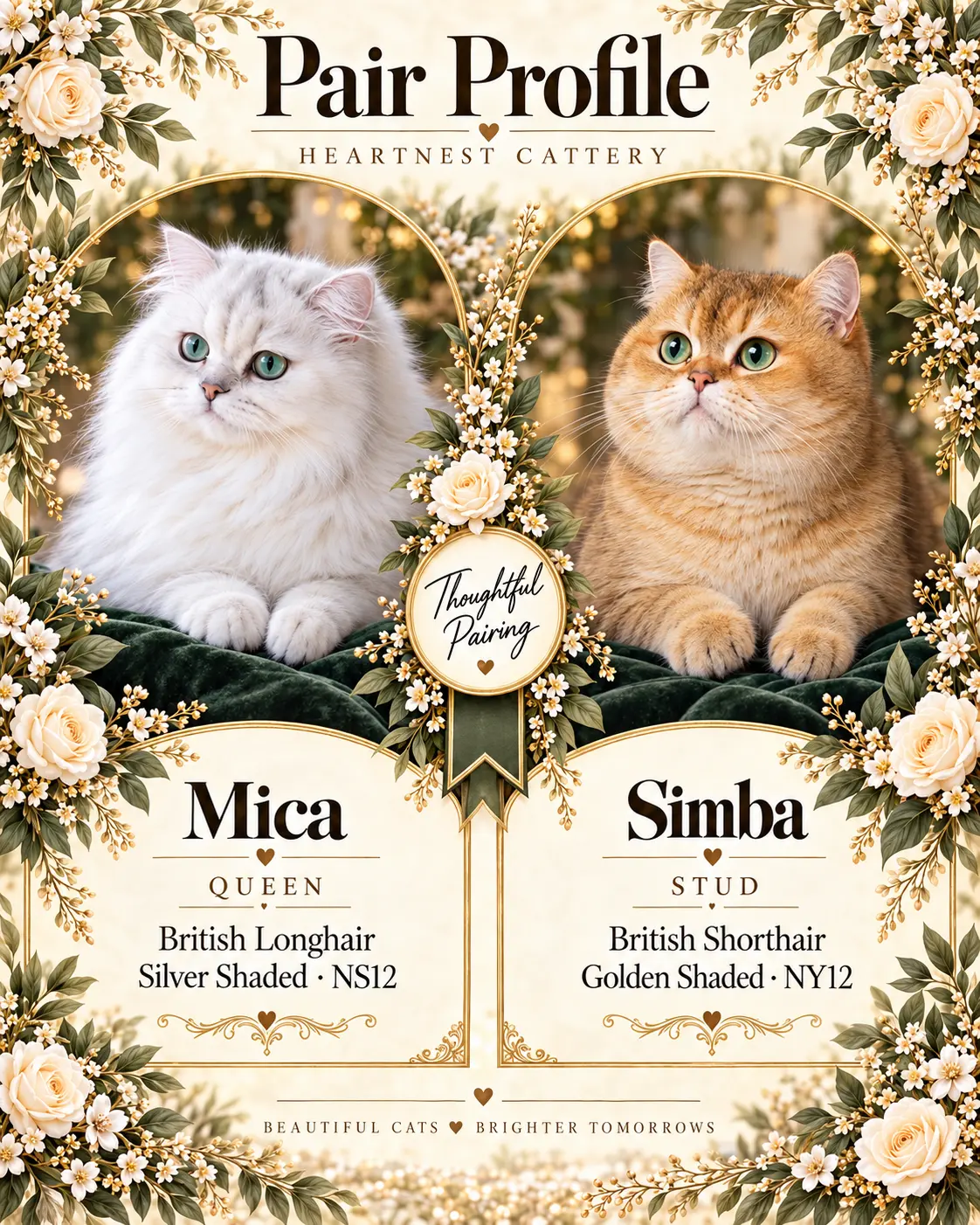
Shared pair profile · Mica and Simba
Our queen · British Longhair
Mica
Our silver shaded British Longhair queen and mother of the current British Shorthair litter. Her own coat length is separate from her kittens’ confirmed Shorthair coats.
Health & registration
Unregistered.
45+ genetic diseases tested; normal heart scan and FeLV/FIV-negative results recorded.
Our queen · British Shorthair
Honey
Honey is our golden British Shorthair queen. Her pregnancy with an imported British Longhair sire is confirmed. Read Honey’s litter announcement.
Future queen · British Shorthair
Pumpkin
Pumpkin is part of our golden British Shorthair programme. Her DNA sample has been sent to the laboratory and the results are pending.
Future stud · British Shorthair
Zolotye Yaytsa
Our young golden British Shorthair male prospect. A future breeding role depends on maturity, suitability and the relevant checks; no mating or kitten availability is implied.
External stud · British Shorthair
Simba
Simba is the golden shaded British Shorthair sire of Mica’s current litter, used by arrangement. He is not owned by HeartNest Cattery.
Health & registration
Stud profile records PKD normal, ALPS normal and FeLV/FIV negative.
Stud profile states GCCF and TICA registration.
Understanding the health records
A DNA panel, a heart scan and an infectious-disease test answer different questions. A clear DNA result covers the variants tested; it does not rule out every illness. A normal scan and a negative infection test describe the examination or sample date. Ask us about the named parents and the evidence relevant to your chosen litter before reservation.
Registry paperwork and pedigrees are discussed for the individual litter. A HeartNest Cattery presentation pedigree supplements association documents and does not turn an unregistered kitten into a registered one.
Reviewed October 2026. Breed tendencies are a guide; each cat is an individual. Care information supports, and does not replace, advice from your own veterinary practice.
Could this be your HeartNest Cattery companion?
Tell us about your household, daily routine and the qualities you value. We match the individual kitten as well as the breed.